



Just as panettone is the symbol of Christmas, colomba is associated with Easter, echoing Christian symbolism in which the dove represents peace and the presence of the Holy Spirit on earth. Christian symbolism finds powerful expression in pastry-making, especially in the preparation of Easter desserts: the figure of the lamb, a symbol of purity and sacrifice, is used, for example, in the marzipan lambs typical of Sicily; the presnitz of Friuli-Venezia Giulia, a spiral-shaped dessert twisted upon itself, symbolises Christ’s crown of thorns; and, again in Friuli, the pinza is famous for its shape, which recalls the sponge with which Jesus was given drink by the Roman centurion on the cross. Throughout Italy, one can find Easter desserts linked to Christian tradition; how could we not mention the delicious filled sweets from Puglia called dita degli apostoli? Or the Umbrian ciaramicola? Easter therefore takes on, in our culinary tradition, a high symbolic value, in which the ritual preparation of recipes carries with it an ancient historical and religious meaning.
Italy’s Most Famous Easter Desserts
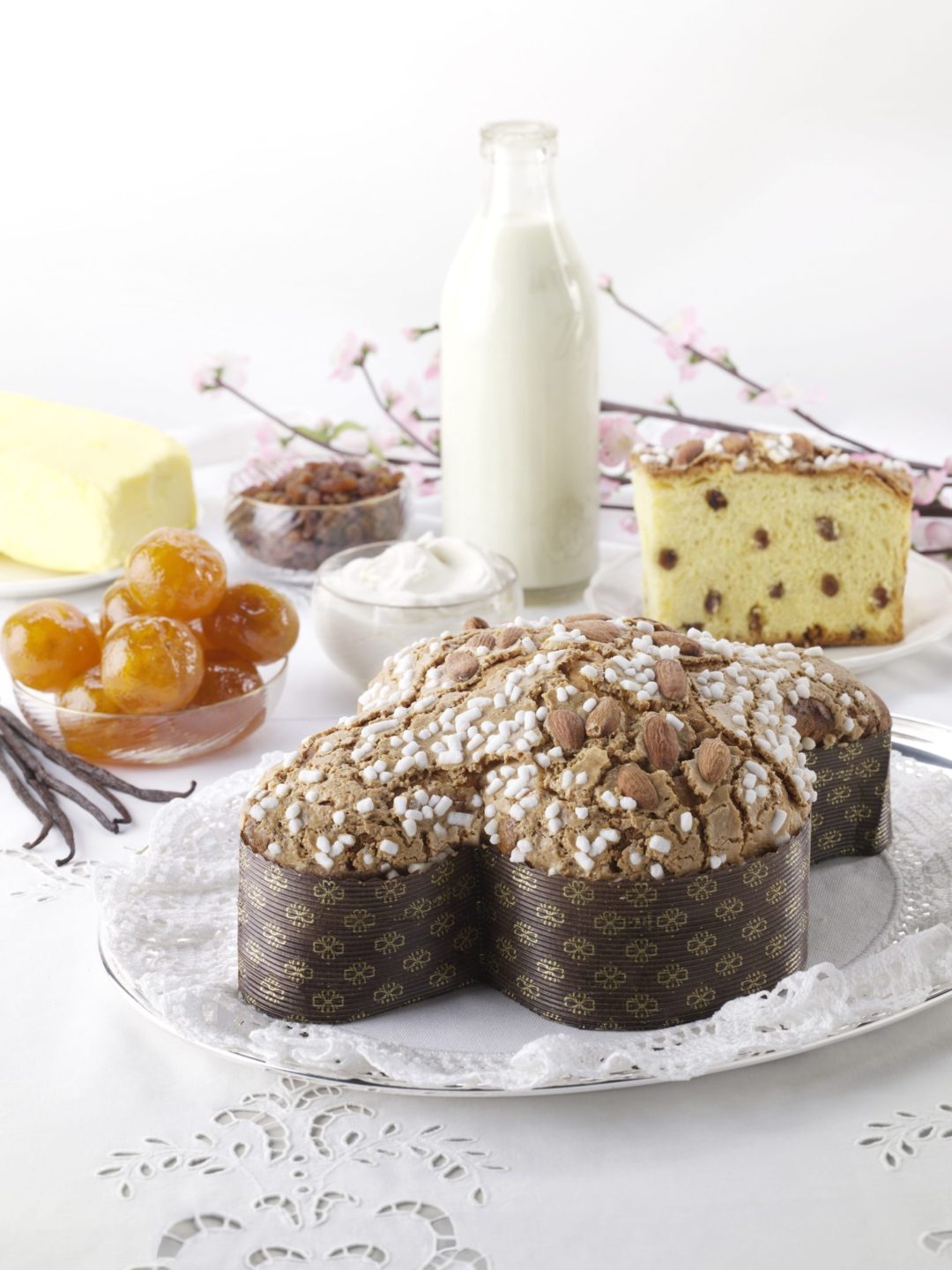
Created in Lombardy in the 1930s, in an attempt to use the same machinery and the same type of dough as panettone, colomba became the Easter dessert par excellence. Yet anecdotes and legends also abound for this sweet. Among the most famous is the story according to which colomba was born in Pavia in 570, as a note in the Touring Club’s Guida Gastronomica d’Italia (1931) recalls: “Its origins are said to date back to the time of King Alboin; when the Lombard king was besieging the city with intentions that were not particularly benevolent, a delegation of young maidens dressed in white went to meet the monarch, bringing as a gift the bird-shaped cake made for the occasion by a local pastry chef. Alboin, evidently won over by the delicacy, accepted the homage and lifted the siege”.
Italy is famous for its gastronomic and pastry-making tradition, and every region has its own typical Easter dessert. Here are a few of them.
Veneto: Fugassa pasquale. Typical of the provinces of Padua and Venice, Fugassa pasquale is a naturally leavened sweet bread, light and soft; originally, it was the dessert of the poor.
Friuli-Venezia Giulia: Putizza. Together with presnitz and pinza, putizza is one of the region’s most important Easter desserts. The dough is made with butter, flour, yeast, eggs, walnuts, raisins and pine nuts, and is rolled up before being baked.
Emilia-Romagna: Ciambella ferrarese or Brazadela. An Easter dessert that comes from the ancient tradition of sweet breads made for propitiatory purposes. A simple recipe, made with just a few ingredients: sifted flour, sugar, butter, eggs, milk, yeast and grated lemon zest.
Umbria: Ciaramicola. A typical Easter dessert from the province of Perugia; it is a ring-shaped cake, red in colour, with a white glaze and colourful sugar sprinkles on top.
Puglia: Dita degli apostoli. These are small filled crêpes placed side by side. The filling is made with ricotta, chocolate, candied fruit, liqueur and spices, wrapped in a soft, crumbly pastry.
